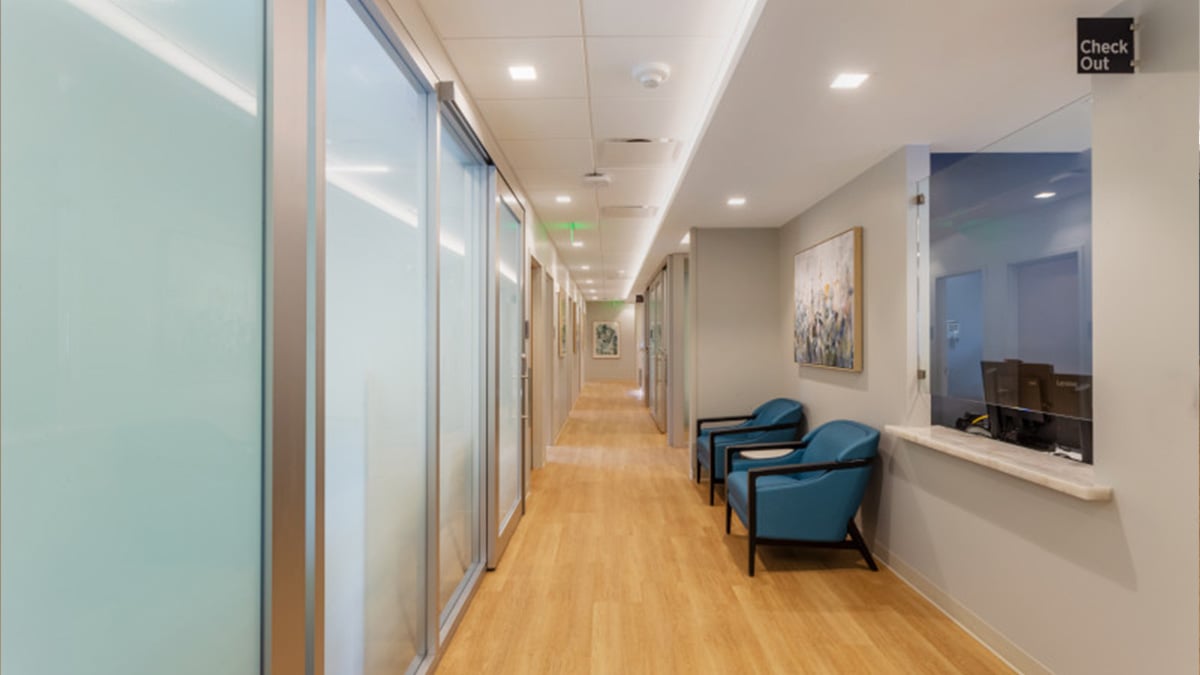
Architectural wall systems demountable interior walls engineered to help healthcare facilities reconfigure spaces without the cost, dust, and downtime associated with traditional construction. From academic medical centers and community hospitals to ambulatory care facilities and medical office buildings, healthcare environments must continually respond to changing needs without disrupting patient care.
KI Wall architectural wall systems provide a flexible, high-performance approach to defining space in healthcare environments. Designed as an alternative to traditional construction, these unitized wall systems help project teams balance performance and design intent while creating spaces that are easier to adapt as care evolves.
Why Healthcare Facilities Are Rethinking Traditional Construction
Advances in medical technology, changing care delivery models, staffing needs, and shifting patient volumes can all reshape how healthcare space is used. Permanent construction can make responding to those changes more disruptive and resource-intensive.
Demountable wall systems and modular interior walls offer another approach, allowing spaces to be reconfigured with less disruption. Architectural walls can help facilities:
- Expand or contract spaces as needs change
- Adapt to new clinical workflows
- Support future growth without repeated demolition and reconstruction
The result is an architectural solution designed not just for the initial build but for how the environment may need to change over time.
Key Benefits of KI Wall in Healthcare
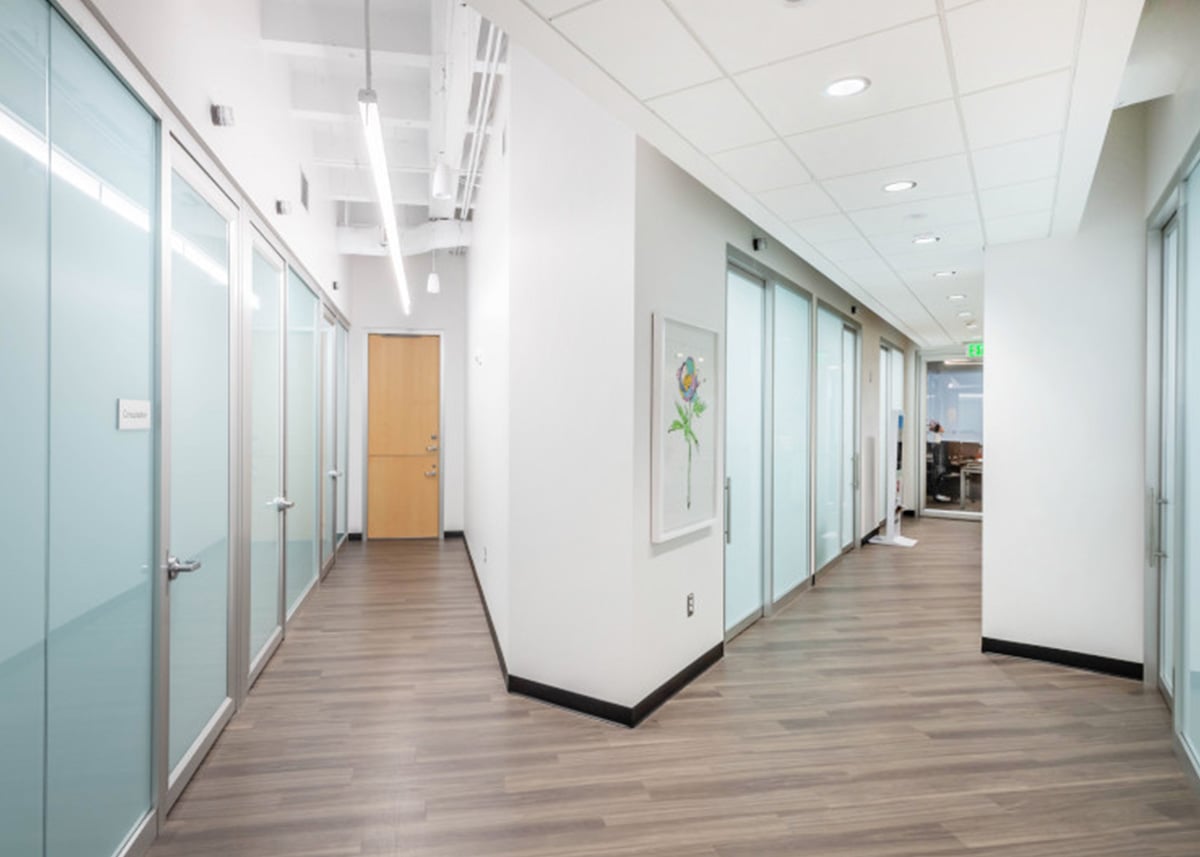
The value of architectural walls in healthcare goes beyond a clean, modern aesthetic. KI Wall systems are engineered around the performance considerations that shape clinical environments, including privacy, durability, cleanability, acoustic control, and adaptability.
Flexibility Where It Matters Most
Space needs can shift quickly as care delivery evolves. Movable walls give facilities greater flexibility to reconfigure exam rooms, consultation spaces, administrative areas, and other environments with less disruption to operations.
Improved Indoor Air Quality
KI Wall architectural wall systems meet strict limits on chemical emissions and are SCS Indoor Advantage Gold certified, supporting healthier indoor environments for patients and staff.
Durability and Cleanability
Healthcare finishes need to stand up to rigorous use and routine cleaning. KI Wall systems can be specified with durable, cleanable finishes engineered to withstand cleaning protocols, including 1:10 bleach solutions, without compromising appearance or long-term performance.
Documented Acoustic Performance
Acoustic privacy plays an important role in protecting sensitive conversations and creating more supportive care environments. KI Wall systems offer high-performing STC ratings across a range of solid and glazed applications, giving project teams options for balancing privacy, visibility, and connection.
Access to Daylight and Views
Daylight can support both patient and staff wellbeing. Glass architectural walls, including all-glass storefronts and transom glazing, extend daylight deeper into the floor plan while maintaining the separation and levels of privacy each space requires.
Application Flexibility Across the Care Continuum
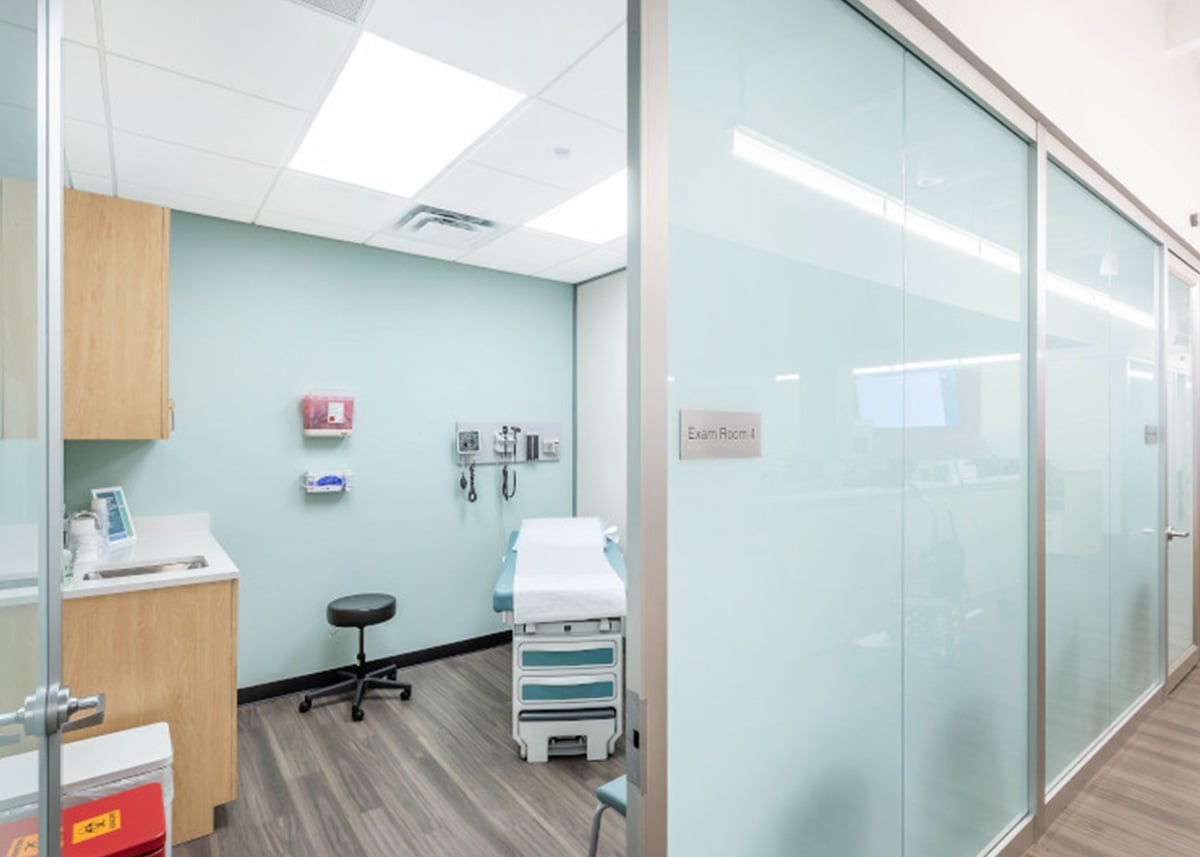
From exam rooms and consultation spaces to administrative offices and staff areas, architectural wall systems give healthcare teams another way to balance flexibility, performance, and aesthetics.
By using modular glass walls and demountable wall systems in place of permanent construction where appropriate, facilities gain spaces that can be reconfigured, maintained, and updated as needs change without starting over each time.
Frequently Asked Questions
What are architectural wall systems used for in healthcare facilities?Architectural wall systems are used to divide, reconfigure, or expand clinical and administrative spaces, such as exam rooms, consultation areas, and offices, with less disruption than traditional demolition and reconstruction.
Are demountable walls compatible with infection control protocols?
KI Wall systems can be specified with durable, cleanable finishes designed to withstand routine cleaning protocols, including 1:10 bleach solutions, while maintaining their appearance and performance over time.
Do movable walls support acoustic privacy in healthcare environments?
Yes. KI Wall architectural walls are available with high-performing STC (Sound Transmission Class) ratings to help manage sound transmission and support privacy across a range of healthcare applications.
Are architectural wall systems a healthier choice for indoor air quality?
KI Wall systems meet strict limits on chemical emissions and carry SCS Indoor Advantage Gold certification, supporting healthier indoor environments for patients and staff.
How do glass architectural walls affect natural light in healthcare spaces?
Glass architectural walls, including all-glass storefronts and transom glazing, allow daylight to reach deeper into the floor plan while providing options for maintaining separation and privacy.
Designing Spaces Where People Heal
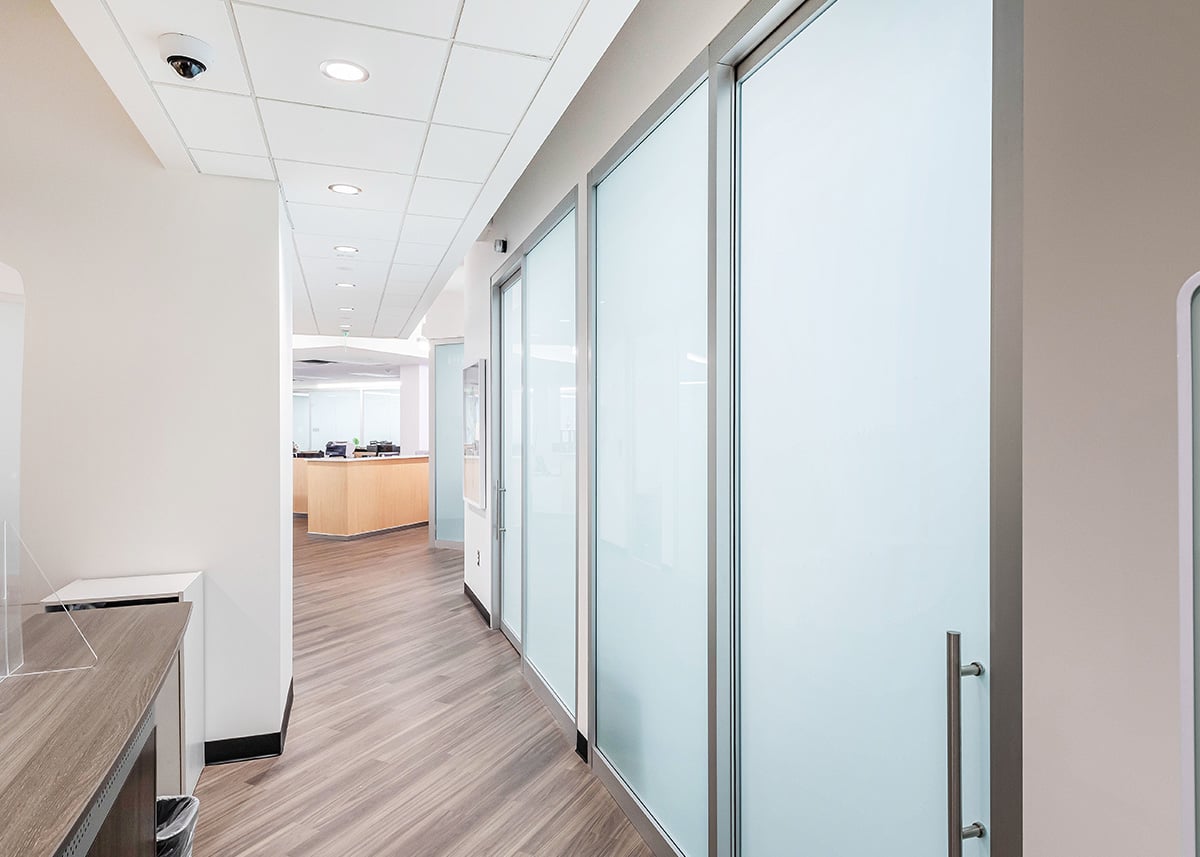
KI Wall helps project teams create healthcare environments that balance privacy, durability, cleanability, acoustic performance, and adaptability. From early planning and specification through installation, we work alongside teams to protect design intent while creating spaces ready to respond as needs change.
Explore how KI Wall can support your next project.
Planning a Healthcare Project?
See what the advantages of demountable walls can mean across the care environment. The KI Wall Healthcare Design & Planning Guide takes a closer look at the real-world needs shaping healthcare spaces and how adaptable walls can help teams plan for change without compromising design intent.
Download the KI Wall Healthcare Design & Planning Guide
Stay Connected to What’s Shaping Space
Subscribe for KI Wall insights, ideas, and inspiration tailored to the markets that matter most to you.
Contributing Authors
